A zoning variance lets one property depart from the zoning ordinance, while the ordinance stays in force for everyone else. In most US cities a board of zoning appeals or adjustment decides, and the owner has to show a hardship or practical difficulty that comes from the land itself. Chicago calls it a variation and Portland an adjustment. Canada has the same idea under other names.
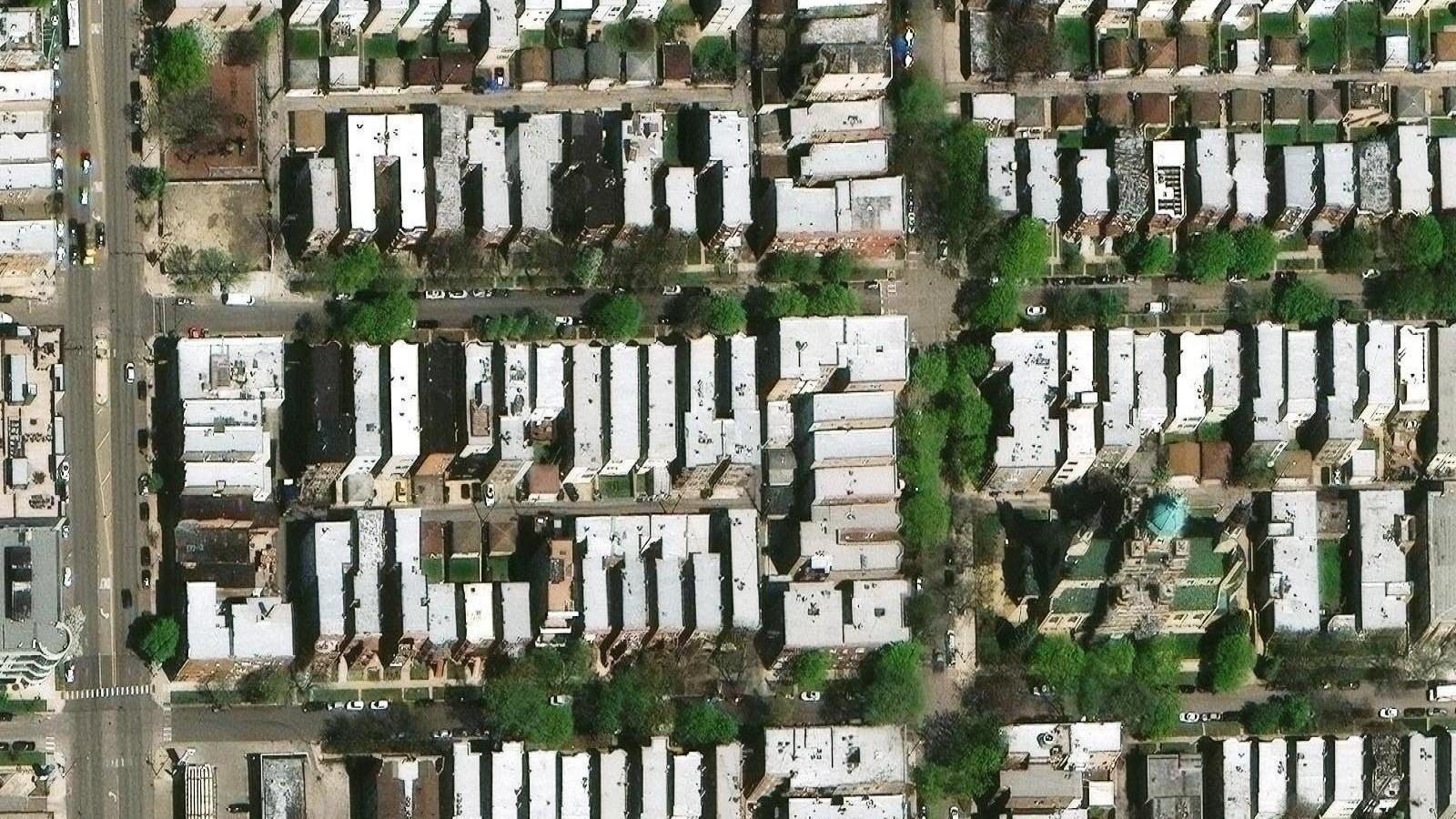 Imagery: Esri World Imagery
The lot is 1.25 m (4.1 ft) narrower than the frontage Bucky reads for RT-4. Many ordinances protect older lots of record, so check that rule before asking for a variance. A detached house here would need use relief, not an area variance.
People file all three under the word variance. Boards and courts treat them very differently.
From the live /zoning-variance page and the statutes it cites. There is no national variance statute; each state enables its own.
The difficulty has to come from the land, such as its size, shape or slope. Wanting a bigger building is not enough.
Bars on a 12.8 m scale. The frontage minimum is as Bucky reads it for RT-4; the side setback rule is the ordinance text. A narrow lot is the kind of physical condition a board weighs. Whether relief is warranted is for the board.
Size, shape, slope or soil that sets it apart from its neighbours.
Splitting a lot too small, or building first, usually counts against you.
Not contrary to the public interest, and true to the spirit of the ordinance.
New York City’s Zoning Resolution 72-21 asks for the minimum variance necessary.
The code’s own word and findings are the ones that count.
From the live /zoning-variance page. Read the current code text for the site before filing.
Each province names the permission and its test differently. Only some ask about hardship.
From the live /minor-variance page and the statutes it cites. Alberta’s Municipal Government Act does not name one instrument; s. 640(6) is the power Calgary calls a relaxation and Edmonton a variance.
If the ask is too big to be relief for one lot, it is a rezoning.
General pattern across Canadian and US cities. Check your city’s process before choosing a route.
No. A setback variance is relief from a dimensional standard. A use variance allows a purpose the zone prohibits. New York defines them separately, and California does not allow a variance to authorize a use the zone does not already allow.
A condition of the land, such as an unusual size, shape or slope, that makes the rule hard to meet. Personal reasons and the wish for a bigger building usually do not count, and a hardship the owner created counts against the request.
Permission for a use the ordinance already names and sends to the board, also called a special or conditional use. Texas lists it as a board power separate from a variance.
No. Relief covers only the standards in the decision. Find every standard the design misses and list them all on the application.
Bucky flags the frontage, area, setback and height rules a lot misses, with each section cited.