Lot coverage is the building footprint divided by the area of the lot. A 40% limit on a 10,000 ft² lot allows a 4,000 ft² footprint. Upper floors do not add to coverage — that is what floor area ratio measures. The building must also stay inside the setbacks.
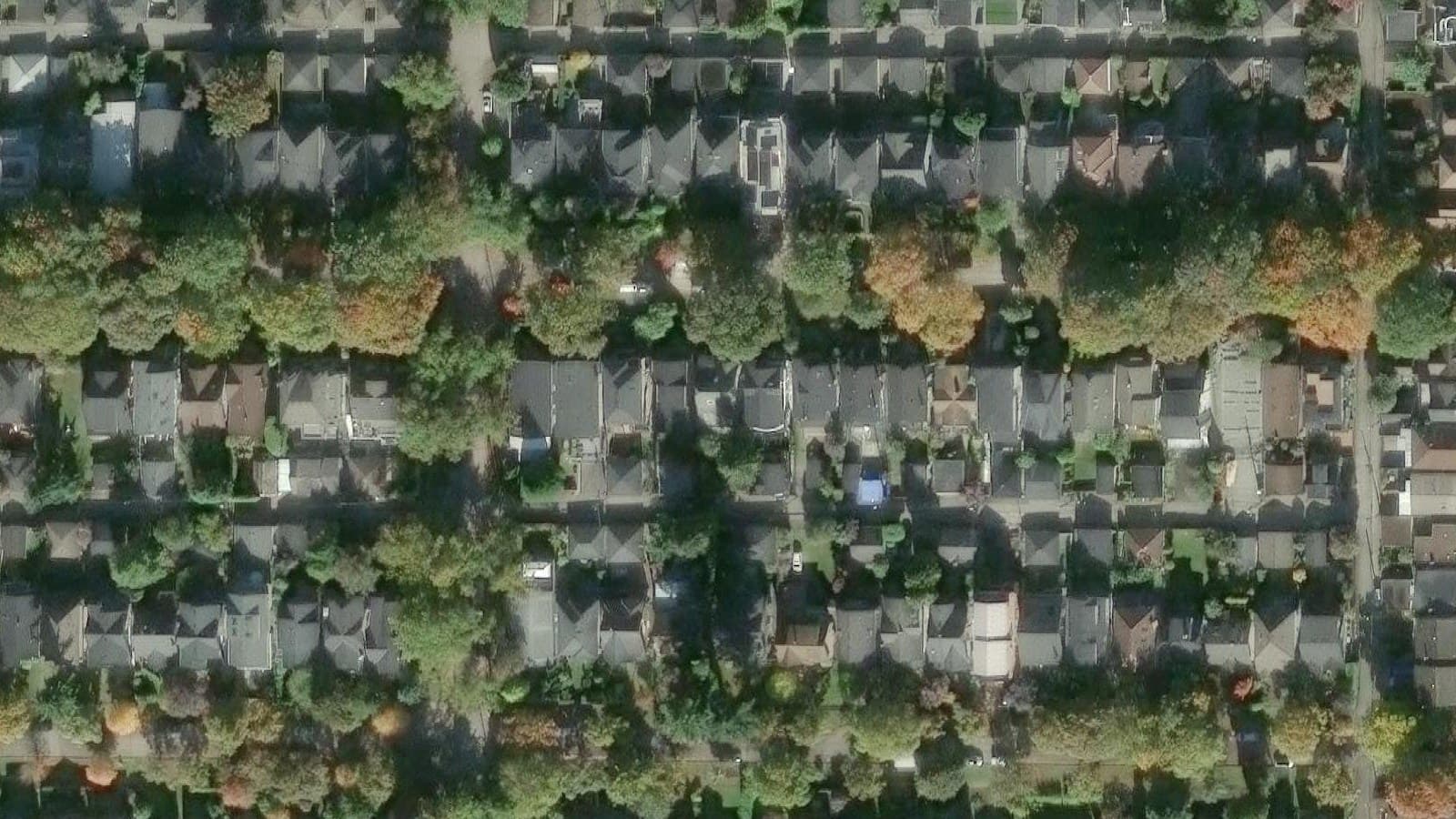 Imagery: Esri World Imagery
Before projections and site exceptions. The setbacks leave 44% of this lot, less than the 50% coverage cap, so on this lot the setbacks are the tighter rule.
Multiply the lot area by the coverage limit, then ask whether that footprint fits inside the setbacks.
Lot coverage = building footprint ÷ lot area. Rearranged, the maximum footprint equals lot area × the coverage limit. On 3458 W 22nd Av that product is 187 m², but the front, rear and side setbacks leave only 166 m². The smaller number is the one you can use.
Use the surveyed parcel area on file, not a listing estimate.
Some cities say “lot coverage,” others “building coverage” or “impervious cover.” Read which surfaces count.
A footprint that meets the percentage still fails if it sits outside a yard.
Coverage caps the plate. Floor area ratio and storeys decide how much you can stack on it.
A lot can satisfy one and fail another.
Local definitions decide. Treat this as a checklist, not a national rule.
Austin, Cedar Park, New Braunfels and San Antonio are live in Bucky. Coverage is on file for some zones and not yet extracted for others.
On a Cedar Park Local Business lot such as 2607 Poplar Lane, Bucky already cites height and setbacks from § 11.03.091, while site coverage and floor area ratio stay marked not extracted — unknown, not unlimited. Search the address you care about and read each fact with its status.
Check coverage on a Texas addressRead: What is a zoning variance?No. Lot coverage compares the building footprint with the lot area, so upper storeys do not add to it. Floor area ratio compares counted floor area with lot area, so every floor that the by-law counts does.
No. The building must sit inside the setbacks and stay under the coverage cap. How much you can cover and where you can put it are separate rules.
Often yes. Many codes count detached garages, covered porches and accessory buildings toward coverage or toward a related impervious-cover limit. Read the zone’s definition of building area before you assume a garage is free.
Shrink the footprint, stack floors, drop accessory buildings that count, or ask for relief. A variance for coverage does not waive setbacks, height or floor area ratio.
Bucky reads lot coverage, setbacks and floor area limits where the city has them on file, with the section cited.