Skip to content
Bucky
  • Bucky ResearchFind the properties where your project fits.
  • Bucky PermittingCheck every application against every rule in minutes.
|
|
Log InBook a Demo
Bucky
|
  • Bucky ResearchFind the properties where your project fits.
  • Bucky PermittingCheck every application against every rule in minutes.
Log InBook a Demo
Selected for the first municipal cohort ofIVÉORead more →

What is a zoning variance?

A zoning variance lets one property depart from the zoning ordinance, while the ordinance stays in force for everyone else. In most US cities a board of zoning appeals or adjustment decides, and the owner has to show a hardship or practical difficulty that comes from the land itself. Chicago calls it a variation and Portland an adjustment. Canada has the same idea under other names.
  • Relief for one lot, not a new rule
  • Area relief and use relief are different asks
  • The hardship must come from the lot, not the owner
  • A rezoning is a different, bigger step
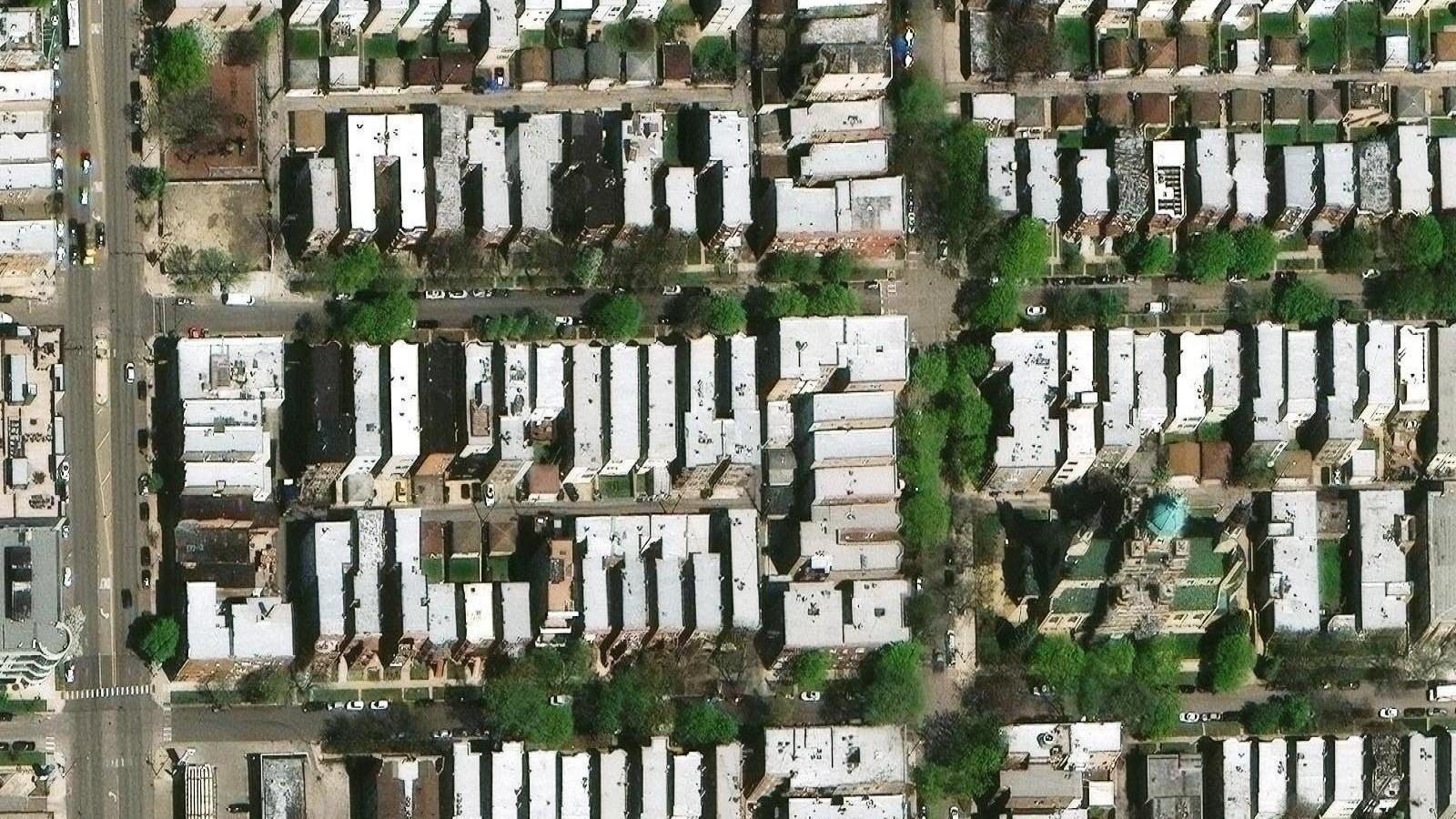
A real lot that misses a dimensional rule
2313 W Iowa StChicago · RT-4Imagery: Esri World Imagery

Lot and district

Chicago Zoning Ordinance · live in Bucky
Lot area
352.3 m²3,792 sq ft
Width × depth
9.4 × 37.6 m30.9 × 123.5 ft
Min. frontage 10.7 m
Fail
Min. lot area 153.3 m²
Pass
Max FAR
1.217-2-0304-A
Max height
11.6 m17-2-0311-A
Detached house
Not permitted
Two-flat, 3+ units
Permitted

The lot is 1.25 m (4.1 ft) narrower than the frontage Bucky reads for RT-4. Many ordinances protect older lots of record, so check that rule before asking for a variance. A detached house here would need use relief, not an area variance.

Find the miss before the board does. A variance covers only the standards named in the decision, so every shortfall has to be on the application.

Bucky checks a lot against the zone’s frontage, area, setbacks and height, and flags each fail. Check an address.

Area vs useHardshipTexas lotBy stateCanadavs rezoning

A Texas lot that misses, two dimensional rules.

Cedar Park is live in Bucky. List every shortfall on the application — a variance covers only the standards named in the decision.

2607 Poplar Lane · Cedar Park · LB
StandardThis lotResult
Min. frontage 100 ft99.7 ftFail
Min. lot area 15,000 ft²11,225 ft²Fail
Front · rear · side · flanking25 · 5 · 12 · 25 ftOn file
Maximum height45 ftOn file
Detached houses and ADUsNot allowed in LBUse barred

Snapshot from Bucky, October 31, 2026. Envelope cited to § 11.03.091. Site coverage and FAR are not extracted for this zone. Tex. Local Gov’t Code §§ 211.008–.009 separate variances from special exceptions.

Check a Texas lot before you applyRead: What are setback requirements?

Area, use, or special exception, three different asks.

People file all three under the word variance. Boards and courts treat them very differently.

Three decisions
DecisionWhat it allowsA statute that separates it
Area varianceAlso bulk or dimensionalA use the zone allows, built in a way the dimensional rules do not: a setback, height, lot width or coverage.N.Y. Town Law § 267-b gives the area variance its own balancing test.
Use varianceA purpose the zone prohibits.Cal. Gov. Code § 65906 forbids it. Massachusetts allows it only where the local ordinance says so.
Special exceptionOr special or conditional useA use the ordinance already names and sends to the board for review.Tex. Local Gov’t Code §§ 211.008–.009 list it as a separate board power. It is not a variance.

From the live /zoning-variance page and the statutes it cites. There is no national variance statute; each state enables its own.

The hardship standard, on a real lot.

The difficulty has to come from the land, such as its size, shape or slope. Wanting a bigger building is not enough.

2313 W Iowa St, width vs the RT-4 minimum
Lot frontageMin. 10.7 m (35 ft)
9.4 m88% of minimum
Combined side setbacks20% of width · 17-2-0309-A
1.9 mof 9.4 m width
Width left to buildAfter side setbacks
7.5 m24.7 ft
Measured or computed on this lotZone minimum frontage

Bars on a 12.8 m scale. The frontage minimum is as Bucky reads it for RT-4; the side setback rule is the ordinance text. A narrow lot is the kind of physical condition a board weighs. Whether relief is warranted is for the board.

  • Unique to the lot

    Size, shape, slope or soil that sets it apart from its neighbours.

  • Not self-created

    Splitting a lot too small, or building first, usually counts against you.

  • No harm to the area

    Not contrary to the public interest, and true to the spirit of the ordinance.

  • The minimum needed

    New York City’s Zoning Resolution 72-21 asks for the minimum variance necessary.

By state and city, same word, different test.

The code’s own word and findings are the ones that count.

Names and tests in force
PlaceName · who decidesWhat must be shown
ChicagoVariation · Zoning Board of AppealsPractical difficulties or particular hardship, and consistency with the ordinance’s purpose. Only for matters the ordinance lists.§ 17-13-1100
TexasVariance · Board of adjustmentNot contrary to the public interest, unnecessary hardship from special conditions, and the spirit of the ordinance observed.Local Gov’t Code § 211.009
New York townsArea or use variance · ZBAUse: unnecessary hardship. Area: benefit to the applicant weighed against detriment to the neighbourhood, on five factors.Town Law § 267-b
CaliforniaVariance · body the ordinance namesSpecial circumstances of size, shape, topography, location or surroundings. Never a use the zone does not allow.Gov. Code § 65906
Portland, OregonAdjustment · staff, Type II reviewModifies a zoning regulation. Cannot allow a use the zone does not allow.Zoning Code 33.805

From the live /zoning-variance page. Read the current code text for the site before filing.

Canada’s equivalents, mostly impact, not hardship.

Each province names the permission and its test differently. Only some ask about hardship.

The same kind of permission, under local names
PlaceName · who decidesWhat it turns on
OntarioMinor variance · Committee of AdjustmentMinor, desirable, and keeps the intent of the by-law and the official plan.Planning Act s. 45(1)
QuébecDérogation mineure · councilNot use or density. Applying the by-law must cause a serious prejudice to the applicant.LAU ss. 145.1–145.4
British ColumbiaDevelopment variance permit · council. Minor variance · Board of VarianceA DVP cannot vary use or density. The board may order a minor variance for undue hardship, also not use or density.Local Government Act ss. 498, 540–542
VancouverBoard of Variance appealHears zoning and development appeals under its own Charter, s. 572.City of Vancouver
CalgaryRelaxation · Development AuthorityWould not unduly interfere with neighbourhood amenities, or with the use, enjoyment or value of neighbouring land.Land Use Bylaw 1P2007 s. 31 · MGA s. 640(6)
EdmontonVariance · Development PlannerSame provincial amenities test. Cannot vary maximum height, FAR or density unless the bylaw says so.Zoning Bylaw s. 7.100

From the live /minor-variance page and the statutes it cites. Alberta’s Municipal Government Act does not name one instrument; s. 640(6) is the power Calgary calls a relaxation and Edmonton a variance.

Read: What is a minor variance?Read: What is lot coverage?Read: What is floor area ratio?

Variance or rezoning, bend the rule or change it.

If the ask is too big to be relief for one lot, it is a rezoning.

How they differ
VarianceRezoning
What changesNothing in the code. One lot gets relief from named standards.The ordinance or by-law itself, and the zone on the map.
Who decidesA board, committee or staff officer.City council, after a public hearing.
TestHardship, impact, or the Ontario findings.Planning merits and fit with the comprehensive or official plan.
Typical askA setback, height, lot width or coverage shortfall.A new use, much more density, or a different building type.
TimeShorterMonths, as a rule of thumbLongerOften many months or more, rule of thumb

General pattern across Canadian and US cities. Check your city’s process before choosing a route.

Common questions

Is a setback variance the same as a use variance?

No. A setback variance is relief from a dimensional standard. A use variance allows a purpose the zone prohibits. New York defines them separately, and California does not allow a variance to authorize a use the zone does not already allow.

What counts as a hardship?

A condition of the land, such as an unusual size, shape or slope, that makes the rule hard to meet. Personal reasons and the wish for a bigger building usually do not count, and a hardship the owner created counts against the request.

What is a special exception?

Permission for a use the ordinance already names and sends to the board, also called a special or conditional use. Texas lists it as a board power separate from a variance.

Does a variance from one rule waive the others?

No. Relief covers only the standards in the decision. Find every standard the design misses and list them all on the application.

Check a lot before you apply.

Bucky flags the frontage, area, setback and height rules a lot misses, with each section cited.

Book a demoTry a free search
Bucky

Property intelligence for the building industry.

Ask AI about Bucky

ChatGPT logoChatGPTGemini logoGeminiClaude logoClaudeGrok logoGrokPerplexity logoPerplexity

Stay in the loop.

One email a week: new cities, what shipped, and the best of the blog.

Unsubscribe anytime. See our Privacy Policy.

Frequently asked
questions

What does Bucky do?

Bucky finds every property where your business fits. Tell us what you build, buy, or plan, and we build a list of matching properties in your area, refreshed every month. You choose what the list becomes: a file, a report, a map, or mail at the owner’s door.

What is a list?

Your search criteria applied to a place. For example: “lots where a garden suite fits” in Austin, or “multiplex-ready lots under 2 acres” in Toronto. Bucky checks every parcel and keeps the ones that match.

Who is Bucky for?

Anyone whose work starts with the right property. Product sellers (ADUs, pools, solar, prefab) use it to reach owners. Developers and investors use it to find sites before they list. Cities and economic development offices use it to show what can be built and attract projects.

Where does the data come from, and can I trust it?

Every fact is cited to its public source, down to the section of the zoning bylaw, so you can defend it with a client or a planner. When a fact isn’t published, Bucky shows it as not found instead of guessing.

Which cities does Bucky cover?

Bucky covers 700+ cities across Canada and the US. Depth depends on what each city publishes. If your city isn’t live yet, request it and we’ll map it.

How much does it cost? Can I try it first?

Yes. The Free plan searches every city Bucky covers and keeps 3 lists with filters, plus as many lists as you fill by hand. Paid plans start at $29 a month for more lists with filters. Reports and postcards are optional, and you pay for them only when you order them.

Do I need to install anything?

No. Bucky runs in your browser. It also works in Claude and ChatGPT, in Chrome next to the listing you’re reading, and on Mac and iPhone.

Platform

  • How it works
  • Postcards
  • Blog
  • Address search
  • City search
  • Features
  • Reports
  • Sample report
  • Data methodology
  • Pricing
  • Book a demo
  • Pre-development software

Product & Integrations

  • Bucky Research
  • Bucky Permitting
  • Bucky MCP
  • Claude Code plugin
  • Chrome extension
  • Mac app
  • iPhone app
  • Docs & API

Free tools

  • All free tools
  • What is my property zoned for?
  • What are my lot dimensions?
  • How many stories can I build?
  • What are my setbacks?
  • What fits in my courtyard?
  • Development charges by city
  • Equity waterfall calculator
  • Residual land value calculator
  • Site research cost calculator

Built for

  • Developers
  • Architects
  • Builders
  • Designers
  • Suppliers
  • Real estate
  • Lenders
  • Building products
  • Government
  • Institutions

Popular guides

  • How to build your home
  • Can I split my lot?
  • Building multi-unit
  • Building a midrise
  • Building an ADU
  • Laneway & garden suites
  • Building a garage
  • Building a shed
  • Building a greenhouse
  • Building a spa
  • Financing your first home

Learn the basics

  • What is floor area ratio?
  • What are setback requirements?
  • What is lot coverage?
  • What is a minor variance?
  • What is a zoning variance?
  • What is highest and best use?
  • Development charges
  • Development timelines
  • MLI Select (CMHC)
  • Committee of Adjustment
  • Glossary

Popular markets

  • Toronto
  • Vancouver
  • Montréal
  • Austin
  • Chicago
  • Brooklyn
  • Los Angeles
  • Denver
  • Minneapolis
  • All cities we cover
  • Get notified for your city

Company & support

  • About us
  • Careers
  • Press
  • Read the blog
  • What’s new
  • Newsletter
  • Merch
  • Ambassadors
  • Students
  • Help & support
  • Contact us
© 2026 Bucky AI Inc. · Montréal and Toronto
Log inTermsPrivacyData deletionllms.txtAGENTS.mdsitemap.mdrobots.txthumans.txt
LinkedInInstagramXYouTubeTikTok