Passer au contenu
Bucky
  • Bucky ResearchTrouvez les propriétés où votre projet s’inscrit.
  • Bucky PermittingVérifiez chaque demande au regard de chaque règle, en quelques minutes.
|
|
Se connecterRéserver une démo
Bucky
|
  • Bucky ResearchTrouvez les propriétés où votre projet s’inscrit.
  • Bucky PermittingVérifiez chaque demande au regard de chaque règle, en quelques minutes.
Se connecterRéserver une démo
Sélectionné pour la première cohorte municipale d’IVÉOEn savoir plus →

What is a minor variance?

A minor variance is Ontario’s permission to depart from the zoning by-law on one property. The by-law stays the same for every other lot. You apply to the Committee of Adjustment, which must find the request minor, desirable for the land, and consistent with the intent of the by-law and the official plan under Planning Act section 45.
  • Applies to one property, not the whole zone
  • Decided at a public hearing
  • Four findings, all of them needed
  • Does not change the by-law itself
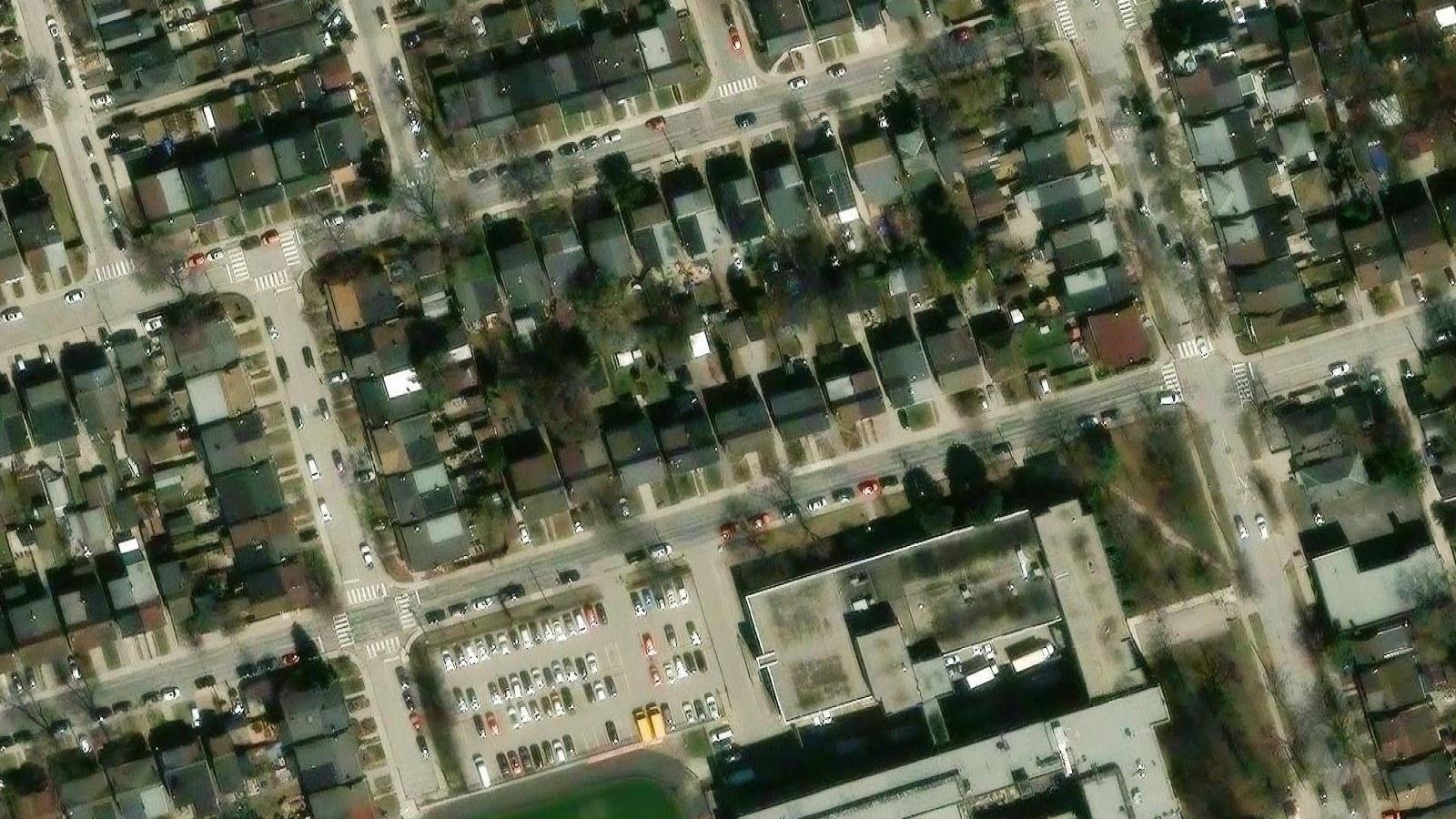
A narrow Toronto lot, where variances are common
88 Glebeholme BlvdToronto · Zone RImagery: Esri World Imagery

Lot and zone

By-law 569-2013 · live in Bucky
Lot area
240.24 m²
Width × depth
7.0 × 36.6 m
Floor space index
0.6§ 10.10.40.40
Max height
10 m§ 10.10.40.10
Front · rear · side
6 · 7.5 · 0.9 m§ 10.10.40.70
Storeys
No zone limit
Min. frontage 6 m
Pass
Overlays checked
Heritage, ravine
Width inside setbacks5.2 m7.03 − 0.9 − 0.9
Floor area allowed144 m²240.24 × 0.6
Example request192 m²FSI 0.8, for an addition
Variance asked for+48 m²33% over the by-law

Lot facts are live. The 0.8 request is an example to show the math, not a real application on this property.

Know exactly what you are asking for. The committee rules on each by-law standard you miss, so the list has to be complete before you file.

Bucky lists the setbacks, height and floor area for an address with the sections cited, so you can see which rules a design misses. Check an address.

Four testsProcess and timelineFeesTypical asksvs severancevs US variance

The four tests, one sentence in the Act.

Section 45(1) puts them in a single sentence. Toronto and most practitioners list them as four findings.

The committee may authorize a variance that, in its opinion, is desirable for the appropriate development or use of the land, if the general intent and purpose of the by-law and of the official plan are maintained. The word “minor” in the power is read as its own test. Subsection (1.0.1) also lets the province or the city add criteria.

  1. 1
    It is minor

    Judged by impact as well as size. A small number can still have a large effect on a neighbour.

  2. 2
    Desirable for the land

    Appropriate development or use of this lot, in its setting.

  3. 3
    Keeps the intent of the by-law

    Why the rule exists, such as light, privacy or access, still holds.

  4. 4
    Keeps the intent of the official plan

    The request fits the plan’s policies for the area.

Planning Act, R.S.O. 1990, c. P.13, s. 45(1) and (1.0.1), as read on e-Laws. The Act does not number the tests. Failing any one is enough to refuse.

Process and timeline, what the Act fixes.

The Act sets a few hard clocks. The rest depends on how busy your committee is.

Statutory clocks, in days
Step
015304560
Rule
HearingAfter the application is received
Within 30 dayss. 45(4)
Notice of decisionSent to the applicant
Within 10 dayss. 45(10)
Appeal windowFrom the decision date
20 dayss. 45(12)
Decision finalIf no one appeals
Then permit

Read from the Planning Act on e-Laws. In practice the 30-day hearing clock rarely holds in large cities once a file is complete and circulated; plan for a few months from filing to a final decision. Rule of thumb.

  • File a complete package

    Toronto takes PDFs by email, with Form A and Form B from October 2026, plans and a zoning review.

  • Notice goes out

    The committee notifies neighbours and public bodies in the manner the regulation prescribes.

  • Public hearing

    The committee hears you and anyone for or against, then decides, often with conditions.

  • Appeals are narrower now

    Since 2022, only the applicant, the Minister, or a specified person or public body may appeal. In Toronto, appeals go to the Toronto Local Appeal Body.

Fees, Toronto in 2026.

Fees are set by each city. Toronto’s rise each year with a cost-of-living adjustment.

Minor variance fee by project type
Additions and alterationsExisting dwellings, three units or less
$2,228.98
New dwellingsThree units or less
$5,011.08
All other usesLarger residential, commercial, industrial, institutional
$6,485.59
After the factWork already built
2 × fee

City of Toronto, Committee of Adjustment forms, submission guidelines and fees, effective January 1, 2026. Up to 80% may be refunded on early withdrawal, and nothing once the Notice of Hearing is mailed. Drawings, a planner and a survey cost extra.

Typical asks, and the ones you no longer need.

Most requests on small lots are about floor area, side yards and rear yards. Some small shortfalls are now deemed to comply.

88 Glebeholme Blvd, by-law vs the 90% rule
StandardBy-lawDeemed to comply down toBelow that
Front setback6.0 m5.4 m No varianceMinor variance
Rear setback7.5 m6.75 m No varianceMinor variance
Side setback0.9 m0.81 m No varianceMinor variance
Floor space index0.6Not covered by the 90% ruleMinor varianceOr a rezoning if it is not minor
Height10 mNot coveredMinor variance

Planning Act s. 34(1.4) and O. Reg. 545/06, s. 1.1, as summarised on the live /minor-variance page: on a parcel of urban residential land outside the Greenbelt, a minimum setback is deemed to be 90% of the by-law distance. It does not touch height, coverage or parking. Confirm the lot qualifies.

  • Floor area

    The most common ask on small lots, often with a rear or third-storey addition.

  • Side setbacks

    A narrow lot leaves little room. Here the box is 5.2 m wide.

  • Height and main walls

    Asked for with additions that go up rather than back.

  • Parking and garden suites

    Spaces, access and the size or placement of an ancillary building.

Minor variance vs severance, two different asks in Toronto.

A variance bends a zoning rule for a building. A severance (consent) changes the lot itself.

Side by side, Toronto
Minor varianceSeverance (consent)
What it doesLets one property depart from a zoning standard such as setback, height or floor space index.Lets an owner split land into new lots, adjust a lot line, or create an easement or long lease.
StatutePlanning Act s. 45Planning Act s. 53
Who hears itCommittee of AdjustmentCommittee of Adjustment (same tribunal in Toronto)
Typical useA rear addition, third storey, garden suite, or multiplex that misses a numeric rule.Splitting a wide lot into two, or fixing a lot line. Often filed with variances for the new lots.
Does it rezone?No. The by-law stays the same for every other lot.No. Consent creates lots; a rezoning changes what the zone allows.

Source: Planning Act ss. 45 and 53; City of Toronto Committee of Adjustment purpose statement. Fees and timelines differ by application type.

Minor variance vs a US variance, different tests.

Both give one lot relief. The question the board asks is not the same.

Side by side
Ontario minor varianceUS zoning variance
Who decidesCommittee of AdjustmentBoard of zoning appeals or adjustment, or the body the ordinance names
Core testMinor, desirable, keeps the intent of the by-law and the official plan.Usually hardship or practical difficulty from conditions special to the lot.
Hardship needed?No. The Act does not ask for it.Often yes, especially for a use variance.
Use changesLimited. s. 45(2) covers some non-conforming and general-terms uses.Many states bar or restrict use variances. California forbids them.
AppealOntario Land Tribunal, or TLAB in Toronto, within 20 days.Usually to a court, by the state’s rules.

US examples from the live /zoning-variance page: Cal. Gov. Code § 65906, N.Y. Town Law § 267-b, Tex. Local Gov’t Code § 211.009.

Common questions

Does a minor variance change the zoning by-law?

No. The permission applies only to the property in the application. A zoning by-law amendment, or rezoning, is the application that changes the by-law.

Is a minor variance the same as a severance in Toronto?

No. A minor variance bends a zoning rule for one building. A severance, also called a consent, splits or adjusts the lot under Planning Act s. 53. Both are heard by Toronto’s Committee of Adjustment, and they are often filed together when a new lot also needs variances.

Is a minor variance the same across Canada?

No. Québec has the dérogation mineure, British Columbia the development variance permit and the board of variance, Calgary the relaxation and Edmonton the variance. Saskatchewan’s minor variance is limited to building distances, at no more than 10%.

How big can a minor variance be?

The Act sets no number. The committee weighs size and impact together, so a request is judged on its effect on the street and the neighbours, not only on the percentage.

When does a setback need no variance?

On urban residential land outside the Greenbelt, a minimum setback is deemed to be 90% of the by-law figure. A shortfall inside that deemed distance needs no variance. Height, coverage and parking are outside that rule.

Sources, statutes and city pages.

Primary links for the tests, timelines and fees on this page.

  • Planning Act, R.S.O. 1990, c. P.13, s. 45
  • O. Reg. 545/06, s. 1.1 (90% deemed setback)
  • City of Toronto: about the Committee of AdjustmentFour findings and hearing procedure
  • City of Toronto: Committee of Adjustment feesFees effective January 1, 2026

Related

  • Toronto Committee of Adjustment
  • Toronto zoning by address
  • What are development charges?
  • What is a zoning variance? (US)

See what your design misses.

Bucky reads the setbacks, height and floor area for an address, with each section cited.

Book a demoTry a free search
Bucky

L’intelligence immobilière pour l’industrie du bâtiment.

Demandez à l’IA à propos de Bucky

Logo ChatGPTChatGPTLogo GeminiGeminiLogo ClaudeClaudeLogo GrokGrokLogo PerplexityPerplexity

Restez à l’affût.

Un courriel par semaine : les nouvelles villes, ce qui a été lancé et le meilleur du blog.

Désabonnement en tout temps. Consultez notre politique de confidentialité.

Questions
fréquentes

Que fait Bucky ?

Bucky trouve chaque propriété qui convient à votre entreprise. Dites-nous ce que vous construisez, achetez ou planifiez, et nous dressons une liste des propriétés correspondantes dans votre secteur, actualisée chaque mois. Vous choisissez ce que devient la liste : un fichier, un rapport, une carte ou du courrier à la porte du propriétaire.

Qu’est-ce qu’une liste ?

Vos critères de recherche appliqués à un lieu. Par exemple : « les lots où un logement de jardin est possible » à Austin, ou « les lots prêts pour un multiplex, de moins de 2 acres » à Toronto. Bucky vérifie chaque parcelle et garde celles qui correspondent.

À qui s’adresse Bucky ?

À toute personne dont le travail commence par la bonne propriété. Les vendeurs de produits (logements accessoires, piscines, solaire, préfabriqué) l’utilisent pour joindre les propriétaires. Les promoteurs et les investisseurs l’utilisent pour trouver des sites avant leur mise en vente. Les villes et les bureaux de développement économique l’utilisent pour montrer ce qui peut être construit et attirer des projets.

D’où viennent les données, et puis-je m’y fier ?

Chaque fait est cité à sa source publique, jusqu’à l’article du règlement de zonage, ce qui vous permet de le défendre devant un client ou un urbaniste. Quand un fait n’est pas publié, Bucky l’indique comme introuvable plutôt que de deviner.

Quelles villes Bucky couvre-t-il ?

Bucky couvre plus de 700 villes au Canada et aux États-Unis. La profondeur dépend de ce que chaque ville publie. Si votre ville n’est pas encore active, demandez-la et nous la cartographierons.

Combien ça coûte ? Puis-je essayer d’abord ?

Oui. Le forfait gratuit recherche toutes les villes couvertes par Bucky et garde 3 listes avec filtres, plus autant de listes que vous en remplissez à la main. Les forfaits payants commencent à 29 $ USD par mois pour plus de listes avec filtres. Les rapports et les cartes postales sont facultatifs, et vous ne les payez que lorsque vous les commandez.

Dois-je installer quelque chose ?

Non. Bucky fonctionne dans votre navigateur. Il fonctionne aussi dans Claude et ChatGPT, dans Chrome à côté de l’annonce que vous lisez, ainsi que sur Mac et iPhone.

Plateforme

  • Comment ça marche
  • Cartes postales
  • Blog
  • Recherche par adresse
  • Recherche par ville
  • Fonctionnalités
  • Rapports
  • Exemple de rapport
  • Méthodologie des données
  • Tarifs
  • Réserver une démo
  • Logiciel de préaménagement

Produits et intégrations

  • Bucky Research
  • Bucky Permitting
  • Bucky MCP
  • Module Claude Code
  • Extension Chrome
  • Application Mac
  • Application iPhone
  • Documentation et API

Outils gratuits

  • Tous les outils gratuits
  • Quel est le zonage de ma propriété ?
  • Quelles sont les dimensions de mon lot ?
  • Combien d’étages puis-je construire ?
  • Quelles sont mes marges de recul ?
  • Que puis-je construire dans ma cour intérieure ?
  • Frais de développement par ville
  • Calculateur de cascade de distribution
  • Calculateur de valeur résiduelle du terrain
  • Calculateur du coût de la recherche de site

Conçu pour

  • Promoteurs
  • Architectes
  • Constructeurs
  • Concepteurs
  • Fournisseurs
  • Immobilier
  • Prêteurs
  • Produits de construction
  • Gouvernement
  • Institutions

Guides populaires

  • Comment construire votre maison
  • Puis-je subdiviser mon lot ?
  • Construire un immeuble multilogement
  • Construire un immeuble de moyenne hauteur
  • Construire un logement accessoire
  • Logements de ruelle et de jardin
  • Construire un garage
  • Construire un cabanon
  • Construire une serre
  • Installer un spa
  • Financer votre première maison

Notions de base

  • Qu’est-ce que le coefficient d’occupation du sol (COS) ?
  • Que sont les marges de recul ?
  • Qu’est-ce que le coefficient d’emprise au sol ?
  • Qu’est-ce qu’une dérogation mineure ?
  • Qu’est-ce qu’une dérogation au zonage ?
  • Qu’est-ce que l’utilisation optimale d’un terrain ?
  • Frais de développement
  • Échéanciers de développement
  • MLI Select (SCHL)
  • Comité de dérogation
  • Glossaire

Marchés populaires

  • Toronto
  • Vancouver
  • Montréal
  • Austin
  • Chicago
  • Brooklyn
  • Los Angeles
  • Denver
  • Minneapolis
  • Toutes les villes couvertes
  • Être avisé pour votre ville

Entreprise et assistance

  • À propos de nous
  • Carrières
  • Presse
  • Lire le blog
  • Nouveautés
  • Infolettre
  • Marchandise
  • Ambassadeurs
  • Étudiants
  • Aide et assistance
  • Contactez-nous
© 2026 Bucky AI Inc. · Montréal et Toronto
Se connecterConditions d’utilisationConfidentialitéSuppression des donnéesllms.txtAGENTS.mdsitemap.mdrobots.txthumans.txt
LinkedInInstagramXYouTubeTikTok