An accessory dwelling unit, or ADU, is a second, smaller home on the same lot as a house. It can be a basement suite, an addition, or a separate building in the backyard. In Canada you will hear secondary suite, laneway suite or garden suite. Most cities allow at least one, but each sets its own size, setback and parking rules.
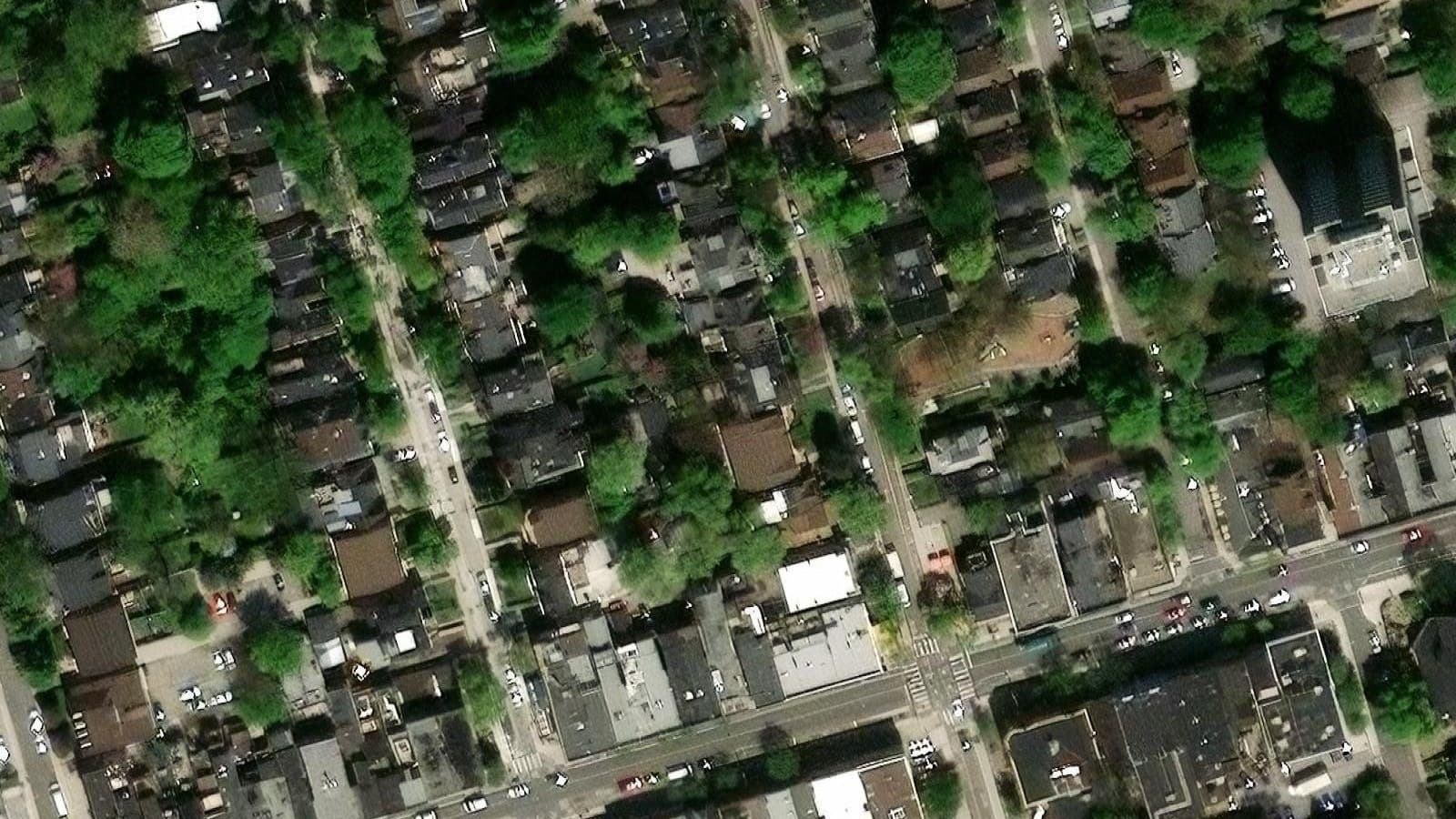 Imagery: Esri World Imagery
A deep, narrow lot like this is the classic garden or laneway suite site: the house sits at the front, and the long backyard is where a second home can go if it meets the suite rules.
Where the second home goes changes the cost, the permits and the rules that apply.
A home inside the house, most often in the basement, with its own entrance and kitchen.
Also: basement suite, secondary suite
An addition to the side or back of the house, or a lock-off unit that shares a wall.
Also: lock-off unit, in-law suite
A small separate house in the backyard or along the lane, with its own services.
Also: laneway house, garden suite, backyard cottage
Cost order is a rule of thumb. A basement suite in an existing house can still need major work for ceiling height, exits and fire separation.
Names and numbers differ, but the same six questions come up almost everywhere.
A maximum floor area or footprint, sometimes a share of the main house. Austin’s tiny home is 400 ft² or less.
Detached ADUs are kept low. Vancouver R1-1 caps outright accessory buildings at 4.6 m.
Distance from the rear and side lot lines, the lane, and the main house.
Fewer cities ask for a space. Austin removed parking minimums in 2023.
Often one per house. Vancouver R1-1 allows at most one secondary suite per duplex unit.
Some codes limit occupants or rentals. Check before you count rent in your budget.
Examples from Vancouver R1-1 §§ 2.2.3 and 2.2.14 (as stored in Bucky) and the City of Austin HOME Amendments page.
This is how ADU permissions actually read, from the text behind three Bucky snapshots.
“The following uses are permitted in the R zone if they comply with the specific conditions … Garden Suite (20) … Laneway Suite (19) … Secondary Suite (14) …”
The numbers point to the conditions in 10.10.20.100, and the detailed suite rules sit in Chapter 150.
“Single Detached House with Secondary Suite: Conditional … Laneway House: Conditional … Duplex with secondary suite must have no more than 1 secondary suite for each dwelling unit.”
Laneway houses follow Section 11 of the Zoning and Development By-law, not this schedule’s density and form rules.
“Accessory dwelling unit, is permitted subject to the following conditions: (a) The accessory dwelling unit is accessory to a residential dwelling unit, and cannot be a manufactured home; and (b) All requirements of section 11.04.032, Accessory Dwelling Units, are met.”
Lot on file: 200 Parkway Dr, 1,487 m². Both interior and detached ADUs are conditional in SR.
Quoted from the by-law text as stored in Bucky. Bucky does not yet hold the text of Cedar Park § 11.04.032, so its size limits are not shown here.
Province and state laws now push cities to allow more than one home per lot.
Sources: City of Austin, HOME Amendments; Cedar Park, Toronto and Vancouver uses from live Bucky snapshots; City of Toronto suite programs; Ontario More Homes Built Faster Act, 2022; Province of BC, Small-scale multi-unit housing.
A few answers early save a redesign later.
Mostly. ADU is the common US term for any second home on a lot. In Canada, a secondary suite usually means one inside the house, while laneway suites, garden suites and laneway houses are the detached kinds.
Yes, in almost every city. Even where zoning allows the suite, the building permit checks ceiling height, exits, fire separation and smoke alarms.
Often, but not everywhere. Some codes limit who can live in an ADU or ban short-term rentals. Read the conditions for your zone before you count on rental income.
Usually not, because an ADU is accessory to the main house on the same lot. Selling it separately would mean a lot split or a strata or condo plan, with their own approvals.
Bucky reads permitted and conditional suite types for an address, with the by-law cited.